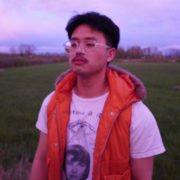
Cannes 2024 (Directors’ Fortnight): The Hyperboreans | Interview of Cristóbal León & Joaquín Cociña


The Hyperboreans (original title: Los hiperbóreos) doesn’t distinguish between reality and fantasy. The film is ostensibly about actress Antonia Giesen, who plays herself, recounting a story told by a patient from her real-life experience as a psychotherapist: the patient, whose story is about a hidden super-race in Chile, is soon revealed to be infamous real-life Chilean diplomat and Nazi sympathizer Miguel Serrano. Giesen runs into the filmmakers themselves—portrayed by crude sculptures—who set her off on an absurd journey to trace some semblance of truth.
The rest of the movie is equal parts political and nonsensical, though León and Cociña are more concerned with feeling than form. This rebel approach to filmmaking has been apparent from the very start: León and Cociña began their careers as visual artists, and initially used filmmaking as a way to document the processes of their paintings and sculptures. Their 2018 film The Wolf House captured this ethos succinctly: the film is a series of photos of thousands of paintings drawn and scrubbed off the walls of a model home, creating a style of living stop-motion that has become the duo’s signature style.
This style is ever-present in The Hyperboreans, but it takes the deconstructive mindset even further: it blends genre conventions and pastiches from fantasy and sci-fi B-movies with a radically facade-less presentation, where puppet strings, moving parts, and even the film set are all exposed to the audience. The result is a movie that’s nearly impossible to pin down in terms of genre or style, but immediately identifiable as a product of León and Cociña.

Where do you even start with such an eclectic film like this? Does it begin as a film or just an art project?
Joaquin Cociña: After The Wolf House, we didn’t have a project but we knew that we didn’t want to make another feature animated film. We spent five years working on The Wolf House and it was weird to just go back to the studio to do the same thing. So we knew that we wanted to make a feature film with actors, something that would be really big.
Cristobal Léon: During the pandemic we wrote one big film and then realized that this big film actually contained two different films. So we split the twins. There was the paranoid crazy political one and one that was more like a love story and family drama.
How did you approach writing or conceptualizing the film?
Joaquin Cociña: I really love the moments of the creation of a new way of doing things: like in the first 30 years of cinema, everything is so good. Or like when they were starting to make the first video images in the 70s, I think they’re so beautiful. We like to revisit those moments when you had to be experimental, because you have no clue of the rules.
Cristobal Léon: I have a really small daughter who’s two and a half years old. I realized that when she plays role playing games—she becomes Bluey, this animated character, then she’s Leonora, herself, then she’s the mother of Bluey—it’s really fluent, the ways she transcends between reality and fiction. I realized, wow, this is how we should be making this film. We’re toddler filmmakers.
Did you have the film’s structure in mind when coming up with it?
Cristobal Léon: For me, the main idea behind this film is to make a film about our incapability of doing normal films. During the pandemic, we had this really long process of writing and erasing everything and writing again, and we were unable to really stick to something. It was funny, and it was painful, and I think we made a film about that. This is a film about two really useless filmmakers trying to make a normal film.
Do you always approach these films as a collaborative process?
Cristobal Léon: Some of the stages and the puppets were done in a workshop with young students, which is something we normally do. We like chaos and we like to lose control in the process.
Joaquin Cociña: At a certain point with our films, we started thinking of the process as a game. We set rules, and when we started on the first shooting day we read these rules to the team. We don’t design or previsualize the result, but we previsualize the rules and we invite people to play with these rules. It’s a strange game and then you have a result.
Why did you decide to present the political elements of the film in such an overt way?
Joaquin Cociña: Years ago we made this short film called The Witch and the Lover, which moves more in the art scene. Jaime Guzmán, who’s the biggest conservative figure in contemporary Chile, appears as a small green puppet but with tits and a dick and whatever. At a certain point we realized no one will actually understand that this is Jaime Guzmán, so at a certain point in the film he says “I’m Jaíme Guzman, minister of the republic,” and we put a real picture of Jaime Guzmán on the screen. I felt so good doing that because it’s making something really clear, not a sophisticated, poetic way of presenting a character that is problematic.
What is the connection between the movie and contemporary Chilean politics?
Joaquin Cociña: In the film there is this character that is an artificial intelligence version of Jaime Guzmán, which is of course a very brutal metaphor of what is happening now in Chile. Like he’s dead, but he became part of the existing system.
Cristobal Léon: Our situation politically now in Chile is more like a fantasy than reality. It makes no f*cking sense. Like it’s a joke, I guess. Some of that is in our film.
What do you see as the role of the viewer in these films?
Joaquin Cociña: At a certain point when we were editing the film, we thought that the film might have this smarty feeling, where you don’t understand it because it is so complex, and that was really dangerous because I hate that in films. We started making little changes so you hopefully feel that you are on a trip and that you don’t need to understand, because we don’t understand it completely.
Cristobal Léon: When I was a little child, I went to Disney World, the one in Florida. You go and there are these robots telling the story of the United States, you know, and I didn’t understand the story of the US but I liked the robots. I liked that they were representing some historical things and I want our films to be like that.
Not that you can pin The Hyperboreans down to a single influence, but the movie I was most reminded of was Inland Empire. What were your artistic points of reference?
Joaquin Cociña: Originally the first idea was to make an adaptation of one of the Chilean novels of Bolaño. We very quickly realized that we didn’t want to do that because we would transform the story so much. We didn’t want to be respectful with the story so it was like, why spend all that money and time trying to get those rights to destroy the story? It didn’t make sense, so we started writing.
Cristobal Léon: David Lynch is always main inspiration. He’s the most recent ghost in our work—he’s the artist in which we reflect the most.
Have you thought about where you want to go further with future projects?
Cristobal Léon: We have two new projects. One is an animated film called Hansel and Gretel, which is us coming back to stop-motion animation. It’s kind of like revisiting the universe of The Wolf House in a way—we want to come back to the studio and animate with our own hands. The other one is called The Blade and is the twin of The Hyperboreans, but it will be really different, we think. Basically we will make The Wolf House 2: The Revenge and The Hyperboreans 2: The Revenge. And because we are visual artists we are always imagining that we will come back to make sculptures and paintings.

Our reporters are on the ground in Cannes, France, to bring you exclusive content from the 77th Cannes Film Festival—explore our coverage here.