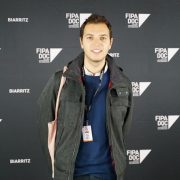
Venice 2024: “Why should journalists bet their money on the next edition of the festival?” petition initiator Marco Consoli asks.


We spoke with Italian journalist Marco Consoli, who initiated the open letter criticizing the lack of access to A-list talents for film journalists at the 81st Venice Film Festival.
Since its opening on August 28, the 81st edition of the world’s oldest film festival has been rocked behind the scenes by a coalition of international journalists protesting the looming threat to their profession. This isn’t a new issue: each year, film journalists at major festivals like Cannes, Venice or Berlin face increasing neglect from distributors of star-studded films. While celebrities parade on the red carpet for photographers, the distributors often avoid sending them to speak with journalists who wish to delve deeper into the films. This reality further strains an already precarious profession, which relies on high-profile interviews to secure the resources needed to cover lesser-known talents.
This year, the Venice Film Festival was the last straw. The nearly 3,000 accredited journalists on site found themselves with few opportunities, as stars were kept almost entirely out of reach by their distributors. In response, a group of international journalists, led by Italian journalist Marco Consoli, published an open letter on August 29, 2024, on the Facebook group International Film Festival Journalists, created in 2020 to unite over 700 journalists navigating a changing industry.
Far from being a shot in the dark, the initiative has gained significant traction in the major trade press (including Screen Daily, Deadline, The Hollywood Reporter and Variety). Marco Consoli, the driving force behind the petition, aims to extend this crucial fight beyond the Venice festival to highlight an essential part of the film industry’s ecosystem. We had the pleasure of interviewing Marco Consoli in Venice for an exclusive conversation.

Have you noticed any reactions from key players in the industry, such as distributors, festivals, or even actors, since the release of your letter?
Marco Consoli: I think that what we started with this press release or petition, call it whatever you want, did the good thing of starting a debate about it. Today I talked with Asif Kapadia, the director of 2073 (presented out of competition at the 81st Venice Film Festival), and he read about it. He was aware of that. I also asked Caleb Landry Jones if he believes that an actor should support his film when it is traveling all around the world at festivals, and he said that he definitely believes that any actor should support the launch of a film. So, I’m sure that this article reached a lot of people in the industry on every level—sales agents, publicists, talents, PR people, journalists, and so on. As someone said, this is an ecosystem. Festivals are promoting films. They need stars, and they need journalists to reach the audience. And if one little piece of the ecosystem is missing, the whole ecosystem will fail sooner or later. So, everybody would be affected—the festivals, the publicists, the small films, the independent films, everyone. So, I think that starting a debate is worth doing because now people are aware, and we can start talking about it and try to find the solution altogether.
To what extent do you believe the significant publicity surrounding your petition will pressure distributors and festivals to change their practices?
Marco Consoli: After the articles on The Hollywood Reporter and other media, I talked with many people in the business—publicists, the ones doing public relations for films at the Venice Film Festival, and others traveling around the world to other festivals like Cannes, Berlinale… They are supporting us. They believe that in the end, this no-junket policy will affect them as well. They have fewer things to do at festivals, and this affects their jobs too. So, I think they will support our protest. After the festival, I think they will try to talk with Alberto Barbera (Artistic Director of the Biennale Cinema) and maybe other directors at other festivals, like Thierry Frémaux (General Delegate for the Cannes Film Festival).
Are you personally embodying this protest? Have any distributors or festivals reached out to you in response?
Marco Consoli: I’m not. I mean, I’m doing these pictures because I started this Facebook page during COVID, the time when we were not able to talk to each other. I know many people in this group who joined because we work at many festivals worldwide. So at that time, we were sad because we couldn’t go anywhere. And I started this group, and everybody joined because we wanted to talk about our passion for films, festivals, exchange information, and feel closer. I mean, talk about our jobs. So, I mean, this is what I did. It’s true that I started this and said many times to my colleagues that we should do something about this problem with the interviews. I’m doing all of this because I believe in this cause, but it’s not a formal union.
Can festivals effectively pressure distributors to offer interviews without risking the loss of A-list films to competing festivals?
Marco Consoli: Of course, festivals are a large platform for films, especially events for the awards season, like the Oscars. So, I think they can put some pressure on these big films that come here, that have their world premieres here. Up to some point, they can put some pressure. Of course, they cannot force them to offer interviews, but they can take part in the debate about that. The festivals are more powerful than us, journalists. But on the other side, we can boycott the films—not me personally, but some may boycott the films that don’t give interviews or not attend festivals because they cannot afford them. So, the festival will be affected by that. So, in the end, I think it’s good to start this debate and talk with festivals and hope that the festivals all together start to say that culture is something important to discuss. Culture is not just about the box office, the red carpet, or Instagram. We need to talk to authors, actors, and let them talk about why they did the film, why they support it, or why they are interested in the subject of the film, and so on.

The open letter mentions that access to A-list talent interviews also helps media outlets highlight emerging or underdog filmmakers on the side. Could you elaborate on how this “runoff” effect works in practice?
Marco Consoli: Yes. Because it’s the economic system. What outlets want from staff members or freelancers and the reason why they send us to the festivals—either they pay their staff members to come here or they ask us to pitch them stories or bring them talents. They want A-list talent interviews. But it’s our job to offer them and convince them that we are giving them a big name like Angelina Jolie or George Clooney. And also, at the same time, we found an author that no one knows is great because of this and that, just because we met him, and he has a great story and a great film. The A-list talents are important for magazines to sell. But the smaller stories, the ones we are betting on as freelancers, are possible only if there are big stories. It’s a matter of balance between what is already very famous and what is unknown.
Have you observed instances of film journalists around you losing work, or even their jobs, due to these evolving practices? How immediate is this risk of extinction?
Marco Consoli: I can tell you that many people are talking at this edition about the fact that probably next year they will not attend Venice because they’re spending a lot of money to come here. There are people coming from Brazil, hoping to interview Angelina Jolie, George Clooney, and others, and they paid a lot of money to come here. And they got back with nothing or losing their money. So, why should they bet their money on the next edition of the festival? And I know that many journalists are also taking side jobs because they cannot afford to be just journalists anymore.
The practices you criticize have been on the rise for some years. What prompted you to take action and send out this open letter now?
Marco Consoli: Yes, it’s true. It became worse and worse over the years. It started, for example, with talents at the same round table. At first, they were offering the first actor for a 20-minute round table, and then they put two actors for 20 minutes. And at some point, they offered even three actors. But what can you do with three actors at the same table? I think that is not even an interview with something different. I doubt this can help you write a good article. So, my question is, do they want us to write a good article about the film? We decided to take action now just because this has been discussed for months and years. But it reached a tipping point here in Venice, where many big films were not giving any interviews or very few. So, I think that people were just frustrated enough to start all of this.
In your view, how crucial are film journalists to the overall film ecosystem?
Marco Consoli: It depends. You can say that we are irrelevant because people don’t read. But it depends on the film. It depends on what films you are trying to promote. Just to give an example, Pablo Larraín is coming here with Maria and Angelina Jolie. Do you think that people who love Angelina Jolie will go to see a biopic of Maria Callas, who they probably don’t even know, just because of Angelina Jolie? Or do you think that probably, with the help of journalists who can explain to the audience who Maria Callas was and why she was relevant, can help the film, and particularly the filmmaker Pablo Larraín, who is an author, to reach more people? I think the second one, especially for those films that are not big blockbusters and don’t sell themselves. But I can tell you that also big brands can fail at some point, like it happened with some Star Wars products that were not successful. And then, when they fail, people start to lose confidence in that. And who can help the audience, the moviegoers, regain confidence in those products? I think journalists have that power to explain to the audience why something is relevant and why it is not.
You mention the looming prospect of AI in the letter. How do you see AI impacting the future of film criticism and journalism?
Marco Consoli: Of course, AI is impacting the future of everything. I wrote about AI in the press release because, in Hollywood, when they protested against the studios and were on strike for almost three months, they mentioned AI as a concern. They believe that studios can use AI to substitute them, to make digital actors, or to replace jobs in the creation of the film. And this will probably happen because companies always try to use the best tools to spare money and make it cheaper. This will happen in journalism as well. But if you had to give an interview, would you prefer to be asked questions by a journalist or by artificial intelligence? I think there is something that cannot be replaced, and that is human trust. Even though it is demonstrated that when a plane crashes, most of the time it is the pilot’s fault, and a self-driving plane would be more effective, I don’t think humans would trust being on a plane with no human pilot. Similarly, I think journalism should be driven by human beings, not AI. But if those human beings are not able to do their job because they cannot do interviews or afford to be there, they will be replaced by technology. And when you face technology and are asked questions by it, you will not be very happy.
Marco Consoli’s answers were collected by Ramona Boban-Vlahović.
Explore our exclusive coverage of the 81st Venice International Film Festival here.