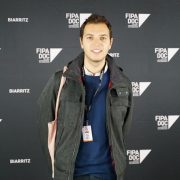
We spoke with Fredrick Leach, whose powerful debut feature film ‘Caged Birds’ will be presented in the Official Selection of the 2021 Pan African Film Festival.
Audiences of the 2021 Pan African Film Festival, held online from February 28th to March 14th, will be able to discover Fredrick Leach’s debut feature film Caged Birds, as part of the festival’s Official Selection. We were lucky to chat with Director Fredrick Leach, whose experiences growing up bi-racial in Texas have shaped his career. After spending three years teaching U.S. history via Teach for America, Fredrick Leach moved to Los Angeles where he quickly made a name for himself as a telented writer. Among the projects he has been working on are a number of short films and several shows for famous webseries company Black&SexyTV. After writing, directing and co-producing his first feature Caged Birds, Fredrick Leach is now looking towards his next feature called A Letter From My White Mother. The film, which will chronicle the troubled relationship between a bi-racial boy and his single, white mother, was a semi-finalist for the Sundance Development Lab and has been optioned with plans to begin production in the coming year.
It was therefore the perfect moment for us to chat with Director Fredrick Leach who is about to launch his first feature to the world, at the Pan African Film Festival. In his interview, Fredrick gave us insights on the production of Caged Birds, his inspirations and creative vision.
“I hope ‘Caged Birds’ can spark discussion about what it means to be Black in America, today.”
To what extent did your experience as a bi-racial teenager and young adult inspire you to write the screenplay of Caged Birds?
Being bi-racial didn’t play a huge part in this project, but the film is largely based on my experiences growing up as a teenager in the suburbs of Texas. There were very few other Black kids (or people of color) at most of the schools I went to and it led me to question why I was there and others that looked like me weren’t. I ultimately came to understand the systemic issues behind this, but it has forever shaped my view on the world and the types of stories I want to tell. Caged Birds is a look at the Black suburban experience — depicting the privilege that comes with it, as well as the racism.
According to you, what does Caged Birds tell about today’s American society? And what do you expect audiences to take away from the film?
I hope Caged Birds can spark discussion about what it means to be Black in America, today. Growing up in the suburbs, I found that way too often, non-Black people would use stereotypes to dictate how “Black” I was. The way I talked, where I lived, what my parents did often meant that I was “not Black enough.” This often left me feeling isolated and caused me to question my identity.
In Caged Birds, two of our Black lead characters have a lot of privilege, but still feel oppressed because their access to things like wealth and good education, seem to diminish their “Blackness.” They play the prank on the White bully, Blake, to try and make themselves feel free, but just get themselves into trouble. Ultimately, the lead character, Jordan, comes to see that the privilege he has does not make him any less Black, and learns how he can use it to be an ally to others who are less fortunate.
“We explored how claustrophobic and isolating the suburban Black experience can be.”
Can you describe your filmmaking style? How did your experience in Los Angeles as a writer, director and editor for a variety of projects help you find your own way of telling stories?
I would say my style really depends on the script and its themes. My direction is always in service of those things.
For Caged Birds we were exploring how claustrophobic and isolating the suburban Black experience could be, and wanted the audience to feel as if the walls were closing in on the characters. To achieve this, we gradually extended the focal length to shorten the depth of field and make everything feel tighter as the film progressed. We also changed the aspect ratio from 2:1 to 2:35 after the boys commit the prank, and used a very muted, moody look in a lot of our settings.
In contrast, my next film is about the struggles of a bi-racial kid and his mother, and takes place over three different time frames, so each will have its own style to represent how their relationship is going at that time.
In terms of how I direct, I believe my job is to provide the vision, and to allow my cast and crew the space to bring that vision to life. I love the collaboration and I love to lean on my team to make the vision sing.
“Being confident in your vision, sensibilities, and who you are, is so important because you’re going to be making a million decisions a day — many of which have to be made in a split second.”
What were the main challenges you faced when making Caged Birds, which is your first feature? Which piece of advice would you like to give to emerging filmmakers about to start their first feature?
I think with any ultra low budget film, money is always a concern, and finding creative ways to do things within your budget is always a large part of the art. Big shout out to my producers, Edwin Walker and Savvy Henderson for finding ways to get a lot of things I wanted despite the budget we had.
Aside from budget, going into my first feature, I spent a lot of time trying to compare myself to other directors, and worrying about if I was making the right decisions. Ultimately what I found is that the only right way to direct is to do whatever is right for you. Being confident in your vision, sensibilities, and who you are, is so important because you’re going to be making a million decisions a day — many of which have to be made in a split second. You don’t have time to stress over if a decision was right or wrong. Instead, you should just throw all of your energy into ensuring whatever choice you made, works out.
For filmmaker about to shoot their first feature, I would say to trust yourself and build a team around you that will fight for you and protect you. Figure out what type of leader you are and then figure out how that translates to your directing style. As important as the creative side is, being a leader that people trust and want to work with is just as essential.
Which part of the process of making Caged Birds did you enjoy the most?
I really love collaborating with people to make something greater than the sum of its parts. I come from a sports background, so I have always had a special love for teamwork and the bond that comes from working closely with others.
As a director I provide the vision and allow the really smart people around me to bring their own creativity to it. Whether that be working with actors to discover their character and their truth, developing the shot list with my DP, or finding a rhythm with my editor, I really love the teamwork, and I always hope to foster a collaborative environment on set.
“Debuting my first feature at the largest Black Film Festival in the world, during Black History month is a dream come true and fits right in line with what the film is about.”
What does it mean to you to be able to present Caged Birds at the Pan African Film Festival in a few days?
It feels like the perfect time and place! Debuting my first feature at the largest Black Film Festival in the world, during Black History month is a dream come true and fits right in line with what the film is about. It’s also very exciting because we’re nominated for jury prizes for “Best Narrative Feature” and “Best First Feature,” so fingers crossed, there! More than anything, I hope the film will spark meaningful conversations about being Black in America in 2021.
Can you tell us about your next project A Letter From My White Mother: where does this project come from and to what extent do you plan on implementing the learnings you took away from making your first feature?
So this project is based on my experiences growing up bi-racial. It’s not autobiographical, but it explores a lot of the confusing feelings I experienced growing up caught between the two sides of my identity. The script is about an emotionally stunted, bi-racial man who receives a letter from his estranged and dying White mother, and has to come terms with their traumatic past before it ruins his current relationship. It happens over three time periods: his innocent youth, his turbulent teenager years, and his adult life, where he is estranged from his mother.
As personal as Caged Birds was, this story is even more so and I cannot wait to dig in and do the work to bring it to life. I learned so much from Caged Birds and have continued to study the craft in the time since. I can’t wait to take everything I’ve learned and put it into this next one! Hopefully in a year or two we’ll be talking again about it!
We want to thank Fredrick Leach for his time and insightful answers.