Melbourne Documentary Film Festival 2026: Somewhere After | Interview with Nicola Macindoe


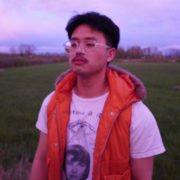
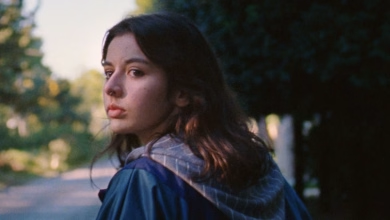
Macindoe opens each interview by asking what natural landscape each participant imagines when they think of isolation. One participant envisions an ocean at night, with a single moonbeam shining across the dark water as the standout detail. Another envisions being caught in a wooden shack in the middle of the forest, staying by a fire as rain pours above. These evocative question primes subjects — and viewers — for the introspective nature of the interviews.
Among the participants are PhD students, artists, and advocates, and the seven particular experiences represented are a good sampling of the ways people lived during quarantine, under Australia’s relatively tight lockdown laws. The documentary is a case study on seven particular experiences through lockdown, and examines the nature of change — when crosscutting between participants’ 2020 and 2023 interviews, Macindoe reveals both how much has changed, as well as how much they initially thought would’ve changed.
We interviewed Nicola Macindoe, the director of Somewhere After, which will have its world premiere at the Melbourne Documentary Film Festival on July 18.
Ryan Yau: How did the original idea for the documentary come about in 2020?
Nicola Macindoe: The original idea for Somewhere After came from a moment early in lockdown. I was sitting at my bedroom window, thinking while looking out at an empty street. I checked the time and realised 45 minutes had passed. When would I normally have time to do this? Never. On the news, there was information about case numbers and unemployment rates but nothing about the isolation and potential for personal reflection. A few weeks later, I texted my friend Nicky about the project, an occupational therapist, who agreed to do an interview and the idea grew from there. I was never interested in the pandemic itself or making a “lockdown film.” Instead, I wanted to make a film at a turning point in history where people all over the world had time to reflect on their lives and how isolation was changing them.
RY: How were interviewees selected?
NM: Making a genuine connection over video call can be hard, so I decided to interview people I already knew. I chose people across a range of genders, ages, and occupations from different parts of Sydney who had time to sit and reflect on their experience. Seeing everyday people trying to answer life’s big questions is what made Michael Apted’s Up Series so powerful, that’s the kind of diverse personal experiences I was hoping to capture.
I also wanted to interview people with a creative interest, as some of the questions were fairly imaginative. For example, one participant, Ian, is a banking software consultant who loves photography. The participants still haven’t met, but all shared the same questions around identity and change. Some will be meeting for the first time at our world premiere, which will be really exciting.
RY: When did you decide it was a good time to follow up with interviewees?
NM: When I started pitching the film to potential crew for the landscape shoots in 2022, I played them excerpts from the interviews. Afterwards, they wanted to hear more and asked whether we could interview the participants again. At first I was hesitant, I’d always seen the film as a time capsule and new interview material would expand the scope of the project enormously. The decision to go back wasn’t straightforward, for reasons people will understand when they see the film.
In 2023, the World Health Organisation announced the pandemic was officially over, even though we were all still feeling its aftermath. When I called the participants to see if they would do another interview, it was clear they had forgotten what they’d said in 2020. We decided to put them in conversation with their past selves by building a custom teleprompter from elastic bands, a Bluetooth speaker and an iPad. Each participant sat opposite their past selves and listened to their 2020 interview. Seeing them react in real time was extraordinary. Once their self-consciousness faded, everyone really opened up. We all laughed a lot through the process as well – everyone was so shocked by how much they had changed.
RY: How did you come up with the opening question, of how each pa?
NM: Although the video call interviews were compelling, I felt they alone didn’t capture how surreal isolation felt, and I also wanted to have visual elements that would create a sense of forward momentum and be distinct for each person. Natural landscapes came to mind because I’ve always loved films where locations become almost like characters, Studio Ghibli films being a great example, so I asked each person what landscape captured the feeling of isolation for them.
Everyone gave such evocative descriptions which gave me and our director of photography, Jesse Phillips, so many ideas. One participant, Sid, picked Yellowstone National Park because it’s surrounded by mountains and feels so vast — or as Sid says, “trapped but also free.” This actually became the central tension of Sid’s arc from 2020 to 2023, it’s fascinating how everyone’s choice of landscape revealed so much about their inner world.
RY: Why did you choose to use animation to portray parts of the film?
NM: The animation is a surviving element of the original vision for Somewhere After as a short film. Originally, I planned to animate everything including the landscapes, but the interview material was so compelling in the end that it demanded to become a feature, and animating a feature on a micro-budget wasn’t feasible. I still wanted to include animation somewhere, though, because documentaries like Cutie and the Boxer had shown me how powerfully animation can bring stories to life, add a new texture, and give the audience breathing room to sit with a story. Our animator Jess Murray interpreted real-life moments that couldn’t be represented through the landscapes as beautiful short animated scenes, like a hug with a friend after five weeks of no contact, in a minimalist style with soft lines and textures combined with vibrant colours.
RY: What was the biggest takeaway from the interviews?
NM: There were many takeaways, but the biggest would have to be how complex the process of change really is, and that’s become the heart of the film. Hollywood makes transformation look easy: In 90 minutes a crisis appears, the protagonist becomes a better person within days, and the story ends with a happily ever after. Somewhere After shows the reality: Change is uneven, unexpected, and sometimes it doesn’t happen at all. This doesn’t have to be good or bad, it’s just part of being human.
After the lockdowns ended, I caught up with a friend who confessed he felt ashamed because isolation had such a negative impact on his mental health and he was still coming to terms with that while his friends seemed “back to normal”. I thought of him and other friends who reported feeling the same way while cutting the film. I hope seeing Somewhere After will offer people a way to reflect on their experiences while being immersed in other people’s stories, so they know they’re not alone. Maybe they’ll even take that out of the cinema and back into their lives.
This article is part of a collaboration with the Melbourne Documentary Film Festival, presented online from July 1–31, 2026, and in cinemas from July 7–19, 2026.