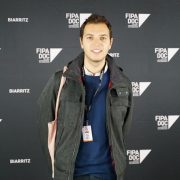
Nordisk Panorama 2021: Interview of Programmer Hawa Sanneh (Documentary Films)


“Filmmakers digging where they stand in times of pandemic led to more personal and private stories”, Hawa Sanneh, from the documentary film programming team of Nordisk Panorama Film Festival, says.
The 32nd Nordisk Panorama Film Festival has just opened! In Malmö, Sweden, film enthusiasts and professionals are able to discover the best Nordic documentaries and short films on 16-21 September 2021. Film Fest Report is honored to take part in the event, and one of the film sections we look forward to delving into is the documentary film lineup, carefully curated by Programmers Cecilia Lidin and Hawa Sanneh. It turns out we were lucky to chat with Programmer Hawa Sanneh about this year’s documentary film program, its curation, its themes, and its main highlights.
Hi Hawa! Can you tell us a bit about your background? What led you to the Short Film programming team of Nordisk Panorama?
I’ve always been interested in storytelling and as a kid I watched a lot of TV shows, many of them were not suitable for kids but it was the 90’s and my parents had to work a lot, so the television became me and my sibling’s babysitter. For me, my interest started in music videos and the stories they were telling in a very short time. For a long time, I saw filmmaking as a hobby and not as a possible career, so I aimed to work within the cultural sector. In 2015 I graduated from the Linköpings University with a bachelor’s degree in Culture, Society and Media. During that period, I came across filmmakers as Marlon Riggs, L.A Rebellion and their inspiring works. So, while studying I co-directed an award-winning documentary film called Gay Enough, and worked alongside with producing music videos. In 2016 I started working as a Project Manager at Cinemafrica Film Festival, a non-profit organization involving in spreading high-quality African and Diaspora cinema in Sweden. Here I got the opportunity to travel abroad, visit film festivals, meet people that work with film and the chance to see films that I normally would not have encountered. Films of Julie Dash, Haile Girima, Ousmane Sembene, Oscar Micheaux are just a few names that I got the chance to programme. These films really inspired me and opened up other ways to create and present storytelling. It brought a greater awareness and perspective in content and form and that’s what I like with film in general. How it can broaden the way you look at the world. Especially within the documentary format. When I got the question to be a part of this year’s programming team I felt YES right away. For me, this assignment meant to collectively try to map out what’s going on in the Nordic countries in 2020. What are the stories, how are they being told, by who and for whom?
Can you talk us through the selection process of this year’s short film lineup? How many films have you reviewed, what is your editorial line, and how did the team work together to achieve the selection?
Cecilia and I received around 120 documentaries and picked out 14 documentaries for the section Best Nordic documentary and 8 films for the other section New Nordic Voice. The second one consists of titles from 1st or 2nd time filmmakers. I’m so glad that I got the honor to work together with Cecilia. She has more than twenty years of experience in the documentary field and was the documentary consultant at both Swedish Film Institute and the Danish Film Institute. To get the chance to pick her brain and work with her has been a creative process. During 3 intensive months we watched all the films and then had meetings to just talk and discuss what we saw, what we felt, by whom and from what country. It was important that we, in the end, represented a fair distribution of films from each country.
“We as filmmakers had to dig where we stand which often leads to more personal and private stories. ”
What are the main themes of this year’s short film program? What do you think this lineup tells about the world and our contemporary society?
I would say that this year’s slot is very broad, we’ve been trying to put a finger on what’s going on in the different countries without maintaining one specific theme. We noticed quite early that in Sweden and Denmark most of the films were about immigration, identity, relationships. While in Norway it was more activist films raising climate issues and life after Utöya. From Finland we had more experimental films exploring different types of ways of telling personal stories. And I really think that’s a consequence of the pandemic. Instead of travelling and exploring, trying to find a story, we as filmmakers had to dig where we stand which often leads to more personal and private stories.
Can you introduce, and share your excitement, for the two films which screened as part of the festival’s opening night: A Mother’s Body (Dir. Jonelle Twum), on which you worked, on a personal note, and Cannon Arm and the Arcade Quest (Dir. Mads Hedegaard)? To what extent do they offer a window to Nordisk Panorama’s identity, and 2021 lineup?
First time seeing Cannon Arm and the Arcade Quest I got surprisingly overwhelmed. It’s a film that plays with your prejudice about the gaming industry and the people in it. It portrays the importance of a strong social community to fulfil your dreams. It’s a documentary that offers a lot of layers within the characters, music and cinematography in a joyful way. We wanted to open the festival in the most warming way and that’s what Cannon Arm and the Arcade Quest is.
A Mother’s Body is a short film where we follow Ernestina and Cat, two cleaners with migrant backgrounds who has worked at the same hotel for a couple of years. But their working relationship in cleaning and the hotel profession extends further in time. They have developed a close relationship, functioning work routines and strategies to meet their job requests. The film observes women at work. In composed sequences we follow their everyday life at work and the women’s relationship to each other, a relationship that has made possible by the job.
These films together portraits stories from people that often are placed as “outsiders” and is showing different aspects of how important it is with friendship.
Finally, what are the main trends that you observe in the documentary film industry in Nordic countries?
There’s no denying that we live in insane times and yet, there is cause for optimism. During the pandemic people are compelled to be honest, expressive, and to connect. I see a lot of more personal and private stories where we get the chance to come as close as we can into people private spaces. Therefore, I think there’s obviously a lot happening when it comes to narrative structure and storytelling in documentaries right now. There’s also loads of hybrid documentaries with fictional parts. I see a lot of documentaries connected with other media or formats, which gives the film a longer life and builds an interesting relation to the audience.
Acknowledgements: Hawa Sanneh, Ilja Stenberg, Nordisk Panorama.