Riccardo Scamarcio is a cinematic jack of all trades: the villain, the hitman, the militant, the bodyguard. But beneath the shadows of these characters lies something more tender – the father. In La prima luce and Il ladro di giorni, he steps into the quiet, complicated light of parenthood, revealing a man who fights not for power, but for connection. Similar to his role in Children of the Monkey, featured in this year’s Orizzonti selection – a paternal figure who undertakes a journey marked by fragility, significance, and ultimate deception.
The film presents Dario, the father of a child with cerebral palsy and disabilities, Enrico (Andrea Aggio). He and his wife move through the days with a rhythm of care – gentle, practiced, and full of love. He is accustomed to the weight of it all. But something flickers beneath the surface. A perfect image hovers just out of reach – the son he dreamed of, embodied in his nephew, Giacomo (Tancredi Naldini).
The film lives and breathes through Dario’s eyes. In his gaze toward Giacomo, brimming with a future he cannot hold. In the quiet kiss on his son’s forehead in the hospital. In the look exchanged with his wife, her eyes full of questions. In the glance toward his brother, a mirror of doubt and responsibility. Each look speaks a different language – and all of it is held by Scamarcio with devastating precision. Scamarcio’s portrayal of a father’s yearning for normalcy is subjected to a crucible of acceptance, destabilizing the moral equilibrium of the narrative. The film holds his perspective with unwavering precision, yet one that operates with full depth, resembling a mechanical study of emotional endurance. The director honors this by revealing what lies beneath the surface: anger, distraction, and a grief that never leaves. With this, Landucci captures something rare – an unofficial father-son bond that spans two generations, fragile and precious in equal measure.
Through Giacomo, Dario starts to excavate his own past – dusting off forgotten hobbies, leaning into the conversations he always longed for. The ache of expectation clashes with the weight of comparison. There is no easy answer here. And this quiet struggle ripples outward, touching not just Dario, but everyone who orbits his life. Dario’s relationships with his wife, Enrico, his brother, and Giacomo all show different versions of the same thing – distraction, rupture, and a kind of silent acceptance. But the film also forces us to think about the morality beneath. What do they expect from each other? It’s not a simple question, and the film doesn’t offer easy answers. The real question is whether this is Dario’s burden, or everyone’s.
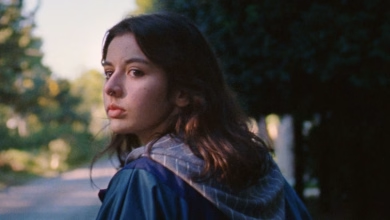
Cinematographer Guido Michelotti gives the film a classic 90s feel, just like the timeless aesthetic of black-and-white films. It also brings a diverse visual texture, evoking the sleek, memorable quality of 90s domestic cinema. With that, the director asks: Are we capable of judging right from wrong in situations where both sides are equally justified? Is it guilt that eats at us when we long for a normal life – away from a difficult, progressive one – even when it involves sensitive conversations and principles? And is taking time off, or distracting oneself, something we need to re-examine?
Tommaso Landucci’s debut film touches something raw in all of us – the part that loves beyond duty, that aches for something normal. It is a film that is disheartening yet empathetic, a rare contrast that finds its way in from the first frame. The film depicts the challenges of parental presence, requiring immense effort, love, and patience. It also interrogates the morality of desiring diversion, feeling, and normalcy – a costly aspiration for some. The film delivers a visceral impact that does not just relent; it intensifies as the runtime progresses.
Due to circumstances, human expectations, and manifestations of love and care – every narrative, every inclination, every aspiration has two dimensions. Ultimately, both perspectives become visible, enabling one to perceive challenges from all angles. Through such observations, the heart perceives with remarkable clarity, even when vision is obscured.
The 83rd edition of the Venice International Film Festival is running on September 2-12, 2026.